
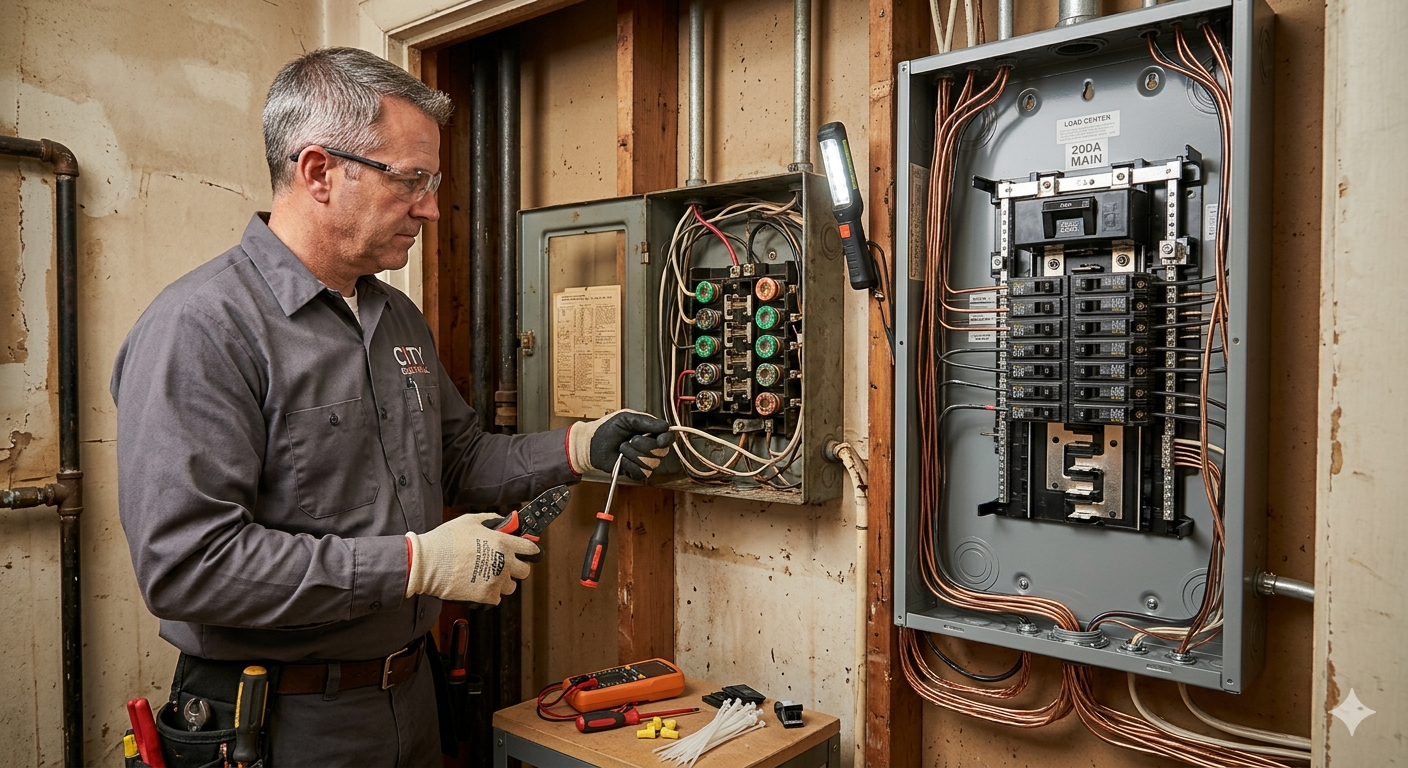
Upgrading from a fuse box to a breaker panel is one of the most important electrical improvements a homeowner can make. Many older homes still rely on outdated fuse box systems that were not designed to handle today’s high electrical demands. With modern appliances, HVAC systems, EV chargers, and smart home devices, the electrical load on homes has increased significantly.
In this guide, we’ll explain what a fuse box is, how it differs from a circuit breaker panel, why upgrading is essential for safety, and what you can expect during the upgrade process.
What Is a Fuse Box?
A fuse box is an older electrical system that controls the flow of electricity in a home using fuses. These fuses are safety devices designed to “blow” or melt when too much electrical current flows through them.
When a fuse blows, it cuts off power to that circuit, preventing overheating and potential fires. However, once a fuse blows, it must be physically replaced with a new one.
Key Characteristics of Fuse Boxes:
- Uses replaceable fuses instead of switches
- Common in homes built before the 1960s–1970s
- Limited electrical capacity (often 60–100 amps)
- Not designed for modern electrical loads
- Requires manual replacement after overload
What Is a Circuit Breaker Panel?
A circuit breaker panel is the modern replacement for a fuse box. Instead of fuses, it uses resettable switches (breakers) that automatically trip when an overload occurs.
Instead of replacing components, you simply reset the breaker switch.
Key Characteristics of Breaker Panels:
- Uses resettable circuit breakers
- Supports higher electrical capacity (100–400 amps)
- Safer and more convenient
- Compatible with modern appliances and systems
- Easier to maintain and upgrade
Fuse Box vs Circuit Breaker Panel
Here’s a simple comparison to understand the difference:
| Feature | Fuse Box | Circuit Breaker Panel |
| Safety | Basic protection | Advanced protection |
| Reset Method | Replace fuse | Flip switch reset |
| Electrical Capacity | Low (60–100 amps) | High (100–400 amps) |
| Maintenance | Frequent replacement | Minimal maintenance |
| Modern Appliance Support | Limited | Fully compatible |
| Fire Risk | Higher in older systems | Lower with modern design |
Why Upgrading from Fuse Box to Breaker Panel Is Important
Upgrading your electrical system is not just about convenience—it is primarily about safety, efficiency, and compliance.
1. Fire Safety Protection
Old fuse boxes are more prone to overheating and electrical fires, especially when overloaded. Modern breaker panels are designed with advanced safety mechanisms that quickly shut down power during faults.
Electrical fires often start due to:
- Overloaded circuits
- Faulty wiring
- Aging electrical components
- Improper fuse replacement
A breaker panel significantly reduces these risks.
2. Supports Modern Electrical Demand
Today’s homes use far more electricity than homes built 40–60 years ago. Think about:
- Air conditioners
- Refrigerators and freezers
- Washing machines and dryers
- Microwaves and ovens
- Computers and gaming systems
- EV chargers and solar systems
A fuse box simply cannot handle this load efficiently. Upgrading ensures your home can safely support modern appliances.
3. Prevents Frequent Power Interruptions
Fuse boxes often blow fuses when demand exceeds capacity. This leads to:
- Sudden power loss
- Inconvenience
- Time-consuming fuse replacement
Breaker panels solve this problem by allowing a quick reset instead of replacement.
4. Improves Home Value
A home with an upgraded electrical system is more attractive to buyers. Many home inspections flag fuse boxes as outdated or unsafe.
Upgrading can:
- Increase resale value
- Improve buyer confidence
- Reduce negotiation issues during sale
5. Required for Renovations and New Installations
Many modern upgrades require a breaker panel, such as:
- Solar panel installation
- EV charger installation
- Home additions or renovations
- HVAC system upgrades
Without an upgraded panel, you may not even qualify for certain installations.
Signs You Need a Fuse Box to Breaker Panel Upgrade
If you are unsure whether you need an upgrade, look for these warning signs:
- Frequent blown fuses
- Flickering or dimming lights
- Burning smell near electrical box
- Limited available power outlets
- Old fuse box (pre-1970s system)
- Appliances not running at full power
- Warm or discolored fuse box panel
If you notice any of these issues, it is strongly recommended to consult a licensed electrician.
How the Upgrade Process Works
Upgrading from a fuse box to a breaker panel is a technical process that must be performed by a licensed electrician.
Step-by-Step Process:
1. Electrical Inspection
The electrician evaluates your current system and determines load requirements.
2. Load Calculation
They calculate how much power your home needs (usually 100A, 200A, or more).
3. Permit Approval
Most regions require electrical permits before installation.
4. Power Shutdown
The main power supply is safely disconnected.
5. Removal of Fuse Box
The old fuse box is carefully removed.
6. Installation of Breaker Panel
A new breaker panel is installed and connected to updated wiring.
7. Circuit Reconnection
All circuits are transferred and tested.
8. Final Safety Inspection
The system is tested for safety and compliance.
How Long Does the Upgrade Take?
Most fuse box to breaker panel upgrades take:
- 1 to 2 days for standard residential homes
- Longer if rewiring or major upgrades are required
Cost of Fuse Box to Breaker Panel Upgrade
The cost depends on several factors:
- Home size
- Electrical load required
- Panel amperage (100A vs 200A)
- Wiring condition
- Local labor rates
Average Cost Range:
- Basic upgrade: $1,500 – $3,000
- Standard 200-amp upgrade: $3,000 – $5,000
- Complex rewiring: $5,000+
While it may seem like a big investment, it significantly improves safety and prevents costly electrical hazards.
Safety Benefits of Upgrading
Upgrading to a breaker panel provides several long-term safety benefits:
- Automatic shutdown during overload
- Reduced fire risk
- Better grounding and protection systems
- Improved circuit stability
- Compliance with modern electrical codes
This upgrade is one of the most effective ways to protect your home and family.
Common Myths About Fuse Box Upgrades
Myth 1: Fuse boxes are still safe if they work
Even if they function, they are outdated and may not handle modern loads safely.
Myth 2: You can just replace fuses and avoid upgrading
Frequent blown fuses indicate a deeper electrical issue.
Myth 3: Upgrades are unnecessary if nothing is wrong
Electrical systems degrade over time, even without visible problems.
Conclusion
Upgrading from a fuse box to a breaker panel is not just an electrical improvement—it is a critical safety upgrade for any older home. With rising energy demands and modern appliances, fuse boxes simply cannot provide the reliability and protection required today.
A breaker panel offers better safety, higher capacity, and long-term peace of mind. Whether you’re planning a renovation, installing new appliances, or simply improving home safety, this upgrade is one of the smartest investments you can make.
If your home still uses a fuse box, it may be time to consider an upgrade before small issues turn into major risks.